Lighting & Ambience
Illumination dictates the emotional resonance of a room. In a professional massage environment, lighting must rapidly transition from bright, practical visibility for cleaning and consultation, to deep, shadow-controlled warmth for the treatment session itself.
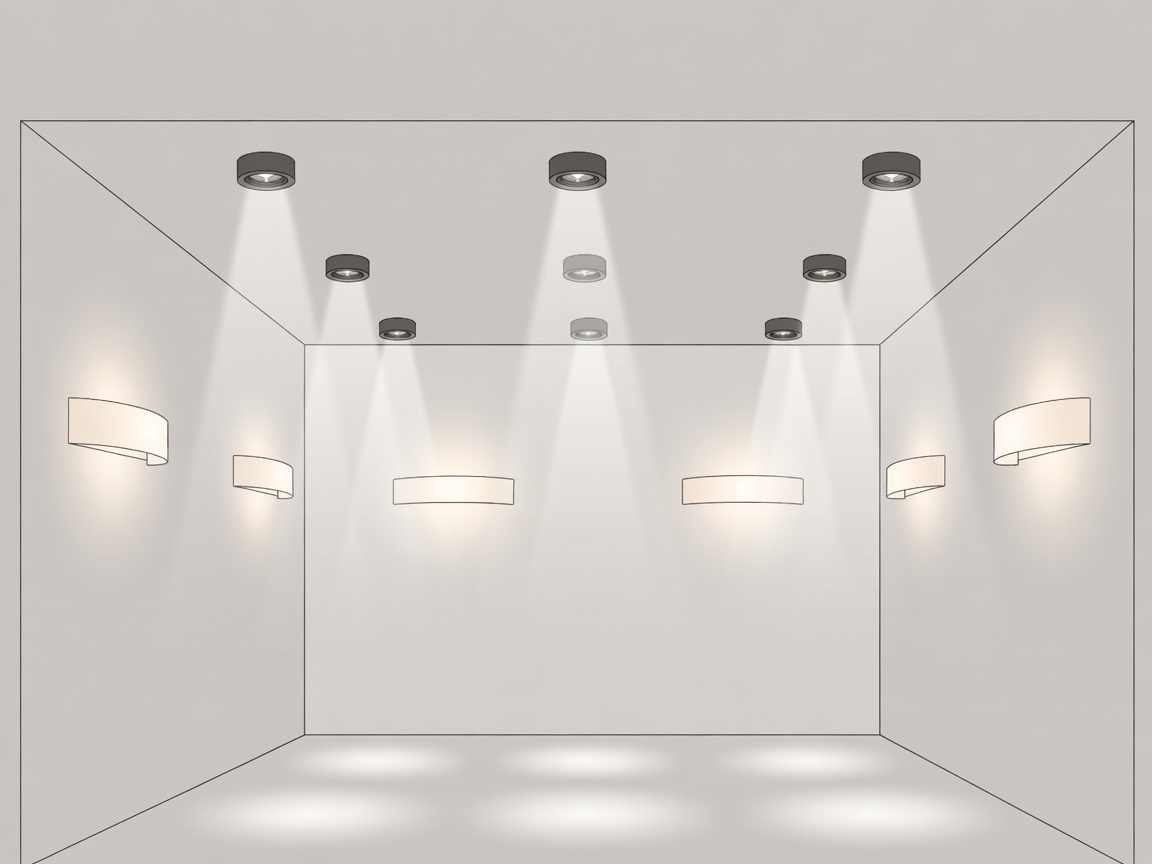
Note: Lighting choices should strictly suit the room's physical function and must be reviewed against the spatial requirements of the actual site. We avoid any therapeutic or medical claims regarding specific light spectrums.
The Strategy of Layered Lighting
A single overhead light source is catastrophic in a massage room. It casts harsh shadows, creates severe glare for supine clients, and offers no nuance. Successful spaces utilize a layered approach: Ambient, Task, and Accent lighting.
Ambient Lighting: This is the baseline illumination. It provides overall visibility for the room. In wellness spaces, ambient light is best achieved indirectly—bouncing light off the ceiling via coves or utilizing heavy diffusion over recessed fixtures to soften the output.
Task Lighting: Used for specific actions. This might include brighter counter illumination at a sink station for washing hands or preparing materials, or a dedicated, controllable light for thorough room sanitation between sessions.
Accent Lighting: This establishes the visual atmosphere during a session. Wall sconces casting warm pools of light, low-level floor illumination, or backlit architectural elements create depth without directing harsh beams at the client.
Controlling Glare and Shadows
When clients are lying face-up (supine), their visual field is directed at the ceiling. A common design failure is placing recessed downlights directly above the treatment table. This forces the client to stare into a glaring bulb. Downlights should be pushed to the perimeter of the room, washing the walls with light, leaving the ceiling space directly above the table relatively dark and restful.
Color Temperature and Dimming Systems
Color temperature heavily influences perceived comfort. Commercial spaces often default to 3500K or 4000K (cooler, whiter light). Treatment rooms should generally utilize 2700K to 3000K (warm white) for ambient and accent layers, mimicking the calm hues of late afternoon sun or candlelight.
Dimming is non-negotiable. Every lighting layer must be on a distinct, easily accessible dimmer. High-quality LED dimming drivers are required to prevent flickering at low levels. The switching system should ideally be reachable by the practitioner upon entering the room, but adjusting the light level should not require leaving the treatment table during a session if possible.
Good For
- Wall-washing fixtures: Softening room boundaries
- Low-level floor lighting: Safe navigation in dark settings
- Warm temperature (2700K): Creating immediate relaxation
What to Know
- Daylight must be strictly controllable via blackout shades.
- Ensure dimmers are compatible with the specific LED fixtures chosen.
Daylight Integration
Natural light is a luxury, but uncontrolled, it disrupts the treatment environment. UV exposure degrades upholstery, and direct sunbeams cause overheating. If windows are present, invest in dual-track window treatments: a sheer layer for soft consultation light, and a total blackout layer for the treatment phase.
Practical Checklist
- Ensure no light fixtures beam directly down onto the table's footprint.
- Specify dimmers that are rated to dim LEDs down to 1% without flickering.
- Place a secondary lighting control switch near the primary working area if possible.
- Use consistent color temperatures across fixtures (e.g., all 2700K) unless intentionally designating a task zone.
- Verify that cleaning staff have access to a bright, switchable override for sanitation.