Treatment Room Furniture
The distinction between a generic room and a professional wellness environment lies heavily in furniture selection. Professional treatment spaces demand highly functional, easily cleaned, and structurally robust pieces that align with both aesthetic goals and physical workflow.
Note: Dimensions, weight ratings, adjustment systems, and specialized features vary wildly by manufacturer and model. Always review manufacturer documentation regarding specific load capacities and electrical requirements before integrating heavy motorized furniture.
The Treatment Table: Fixed vs. Adjustable
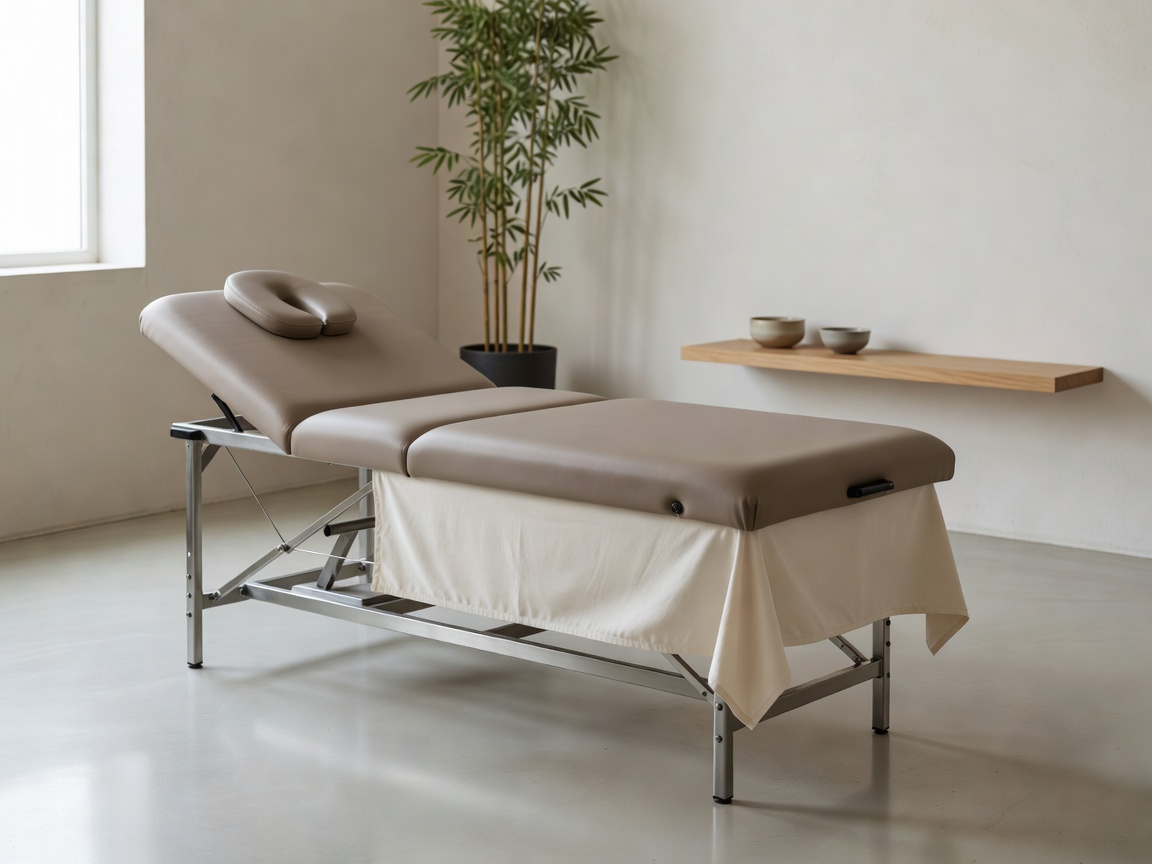
The centerpiece of any massage room is the treatment table. A fundamental choice is between fixed-height, manually adjustable, and electrically or hydraulically adjustable tables. Electric lift tables offer immense ergonomic benefits for practitioners, allowing rapid height changes to accommodate different client body types and varying modalities throughout a session.
However, electric tables require floor-level power integration, carry a much heavier footprint, and dominate the visual space. A fixed wooden frame table often provides a warmer, more natural architectural aesthetic but locks the practitioner into a single working height, which can cause strain if multiple therapists share the room. The decision should map directly to the business model and the practitioner's physical requirements.
Practitioner Seating and Side Tables
Ergonomic rolling stools are critical tools. They must allow silent, fluid movement across hard flooring without stuttering or catching. Base widths matter; a stool base that is too wide will frequently collide with the treatment table's legs or base housing.
Side tables or small mobile carts are equally important. They serve as immediate staging areas for oils, lotions, bolsters, and small tools. Mobile carts offer workflow flexibility, but stationary side tables integrated into the room’s millwork can provide a cleaner, more upscale architectural appearance. The choice usually hinges on how much equipment needs to move with the therapist during the session.
Guest Seating and Transition Zones
Client comfort extends to the moments before and after the session. A dedicated guest chair is necessary for consultations, removing shoes, and dressing. This piece of furniture is a prime opportunity to inject soft textiles and distinctive design language into the room, offsetting the harder, easily-sanitized surfaces required elsewhere.
Good For
- Electric tables: Multi-practitioner spaces
- Custom cabinetry: High-end, seamless aesthetics
- Mobile carts: High-turnover, multi-modality rooms
What to Know
- Upholstery grades dictate cleaning protocols; medical-grade vinyls handle harsh sanitizers better than standard PU leathers.
- Aesthetically pleasing retail furniture often lacks the structural durability for high-volume commercial use.
Cabinetry and Built-Ins
Standard retail shelving often looks cluttered in a professional environment. Built-in cabinets scale perfectly to the room's proportions, hide electrical cords for towel warmers, and keep sanitization supplies out of client view. When specifying cabinetry, prioritize closed storage over open shelving for the majority of the room's volume to maintain a sense of calm visual order.
Consider the depth of the cabinets carefully. Deep cabinets (standard 24-inch kitchen depth) may encroach too far into the practitioner’s circulation zone in a smaller room. Shallower 12-to-15-inch depth cabinets are often sufficient for rolled towels, bottles, and general supplies.
Practical Checklist
- Confirm the table’s maximum working height matches the practitioner's ergonomics.
- Ensure power outlets are correctly positioned for electric tables (preferably floor-mounted).
- Test the rolling stool base width against the table’s under-clearance.
- Select guest seating with arms to assist clients with mobility challenges when standing.
- Verify that all primary working surfaces (carts, tables) can withstand commercial cleaning agents.