Storage & Equipment
Visual clutter immediately degrades the perceived professionalism of a treatment space. Superior organization relies on defining precise homes for linens, consumables, and hardware, ensuring practitioners can access what they need blindly, without breaking the rhythm of the service.
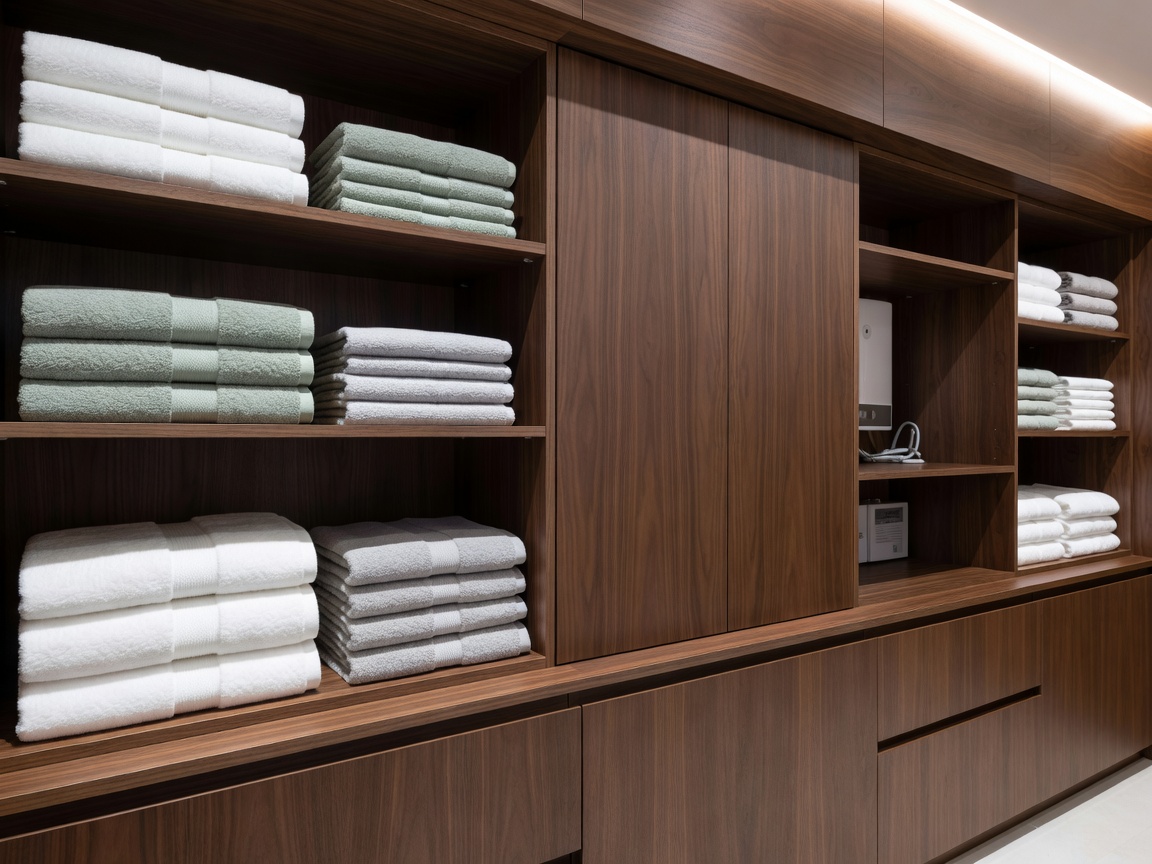
Note: We prioritize organization and practical access. When planning electrical layouts for heavy equipment, heat sources, or towel warmers, always ensure professional, code-compliant installation over DIY approaches.
Linen and Towel Organization
High-volume massage spaces process immense quantities of linens. Fresh sheets, blankets, and towels require dedicated volume. Storing them in open view can feel luxurious if highly curated—such as a small stack of perfectly rolled towels—but bulk storage must be hidden. Closed cabinetry prevents dust accumulation on clean linens and reduces visual noise.
Plan storage zones based on frequency of use. Primary linens required for the current service should be arm's-length away. Secondary backup supplies can be housed in lower cabinets or centralized hallway closets to preserve room footprint.
Equipment Placement and Workflow
Hot stone warmers, towel cabinets (cabbies), ultrasound machines, or specialized modality equipment present major organizational hurdles. They require dedicated counter space, proximity to power outlets, and safe heat dissipation clearances. A standard error is placing a heavy, hot towel warmer on a flimsy retail shelving unit.
Equipment placement should map to the practitioner's workflow. If a hot towel is required at the end of a sequence focusing on the feet, the warmer should ideally be accessible near the foot of the table, negating the need to walk across the room holding a dripping, hot item.
Closed Cabinets vs. Open Shelving
While open shelving looks excellent in architectural photography, it demands relentless maintenance in reality. Oil bottles, half-empty lotion pumps, and sanitizing wipes do not look premium. Rely on a 90/10 rule: 90% closed storage, 10% open display for intentional items like folded luxury towels, ambient light sources, or botanical elements.
Good For
- Built-in cabinets: Seamless cable management
- Mobile carts: Moving primary tools around the table
- Wall-mounted dispensers: High-volume, hygienic lotion access
What to Know
- Hot towel cabinets generate significant heat and humidity; do not enclose them without proper venting.
- Cleaning supplies must be stored separately from clean linens to prevent cross-contamination.
Cable Management and Access Routes
Trailing cords are trip hazards and aesthetic failures. When designing a room from scratch, include floor outlets directly beneath the treatment table for electric lifts, table warmers, and practitioner tools. For wall-mounted cabinetry, specify grommets to drop equipment cables into hidden power strips within the lower cabinets.
In smaller rooms, prioritize vertical storage. Floor-to-ceiling shallow cabinets utilize dead wall space without encroaching on the critical central circulation path.
Practical Checklist
- Calculate the exact volume of linens needed for one full shift and size cabinets accordingly.
- Measure the footprint and required heat clearances of all electrical equipment.
- Verify power outlet proximity to planned equipment locations.
- Ensure a dedicated, out-of-sight location for the room's trash and soiled linen receptacles.
- Create a hidden but easily accessible zone for heavy-duty room cleaning supplies.